a reflection: "the youth challenges consecrated life and priesthood"
Sunday, November 03, 2013
Why bother following you!
a reflection: "the youth challenges consecrated life and priesthood"
Sunday, June 30, 2013
ANS interview - Summer 2013
- In service to the Church./How
did the salesian mission start?
- By 1998 through
the Salesian confreres in S.Korea, the
Salesians received an invitation from the
Apostolic Nuncio (Nunciature shared
by S.Korea and the Republic of Mongolia) and the Missio Sui Iuris
Superior of Ulaanbaatar (Msgr.
Padilla, C.I.C.M./Scheute missionaries).
The Salesian Provincial of So. Korea (Fr., Vaclav) made the first
exploratory visits. Then the Councilor for the Missions (Fr.
Odorico) likewise made his personal visit to Mongolia. These visits
resulted in finalizing the proper
response: a) that the Province of So.
Korea could not accept an additional mission territory because they
were already preoccupied with the Mission territory in Manchuria
(Yanji). b) That
the Mongolia
Mission was offered to the Province of
Vietnam instead. With the essentials in
place the Provincial of
Vietnam Fr. John Ty and his council
accepted the challenge of the Rector
Major who thus approved
the creation of the Mongolia mission in
the year 2000.
- As part of the Jubilee year
celebrations of Third
Millenium, and international set of 6
confreres were pulled from 4 countries (Vietnam, Korea, Slovakia and
the Philippines) to do the pioneering work.
- In the
peak of one of the worst winters of Mongolia, the Salesians entered
not to visit but this time to stay in February 7, 2001.
Three days later the
designated superior of the team (Fr. Carlo
Villegas) was left behind with
a fraternal hug and prayer by Fr. Odorico
and Fr. Ty in Ulaanbaatar to found the
Salesian mission works
in (a) putting up at once a technical
school (a commitment previously accepted); (b) preparing a
place and home
to live for the other
pioneers that would be
joining Fr.
Villegas, 9 months
later and
(c) begin immediately daily classes in
Mongolian language.
- Describe the salesians presences in Mongolia? (in brief…)
- Nine (9) years after formal diplomatic ties were established (April 1992) between the Republic of Mongolia and the Vatican. The Salesians are the second (men) religious congregation to work in the mission of Mongolia. The Catholic Church Mission of Mongolia was entrusted and began by the congregation (men) C.I.C.M./ Scheute missionaries (July 1992). It is to the CICM that the ecclesiastical mission territory was entrusted by the Holy See.
- The Salesians serve
the Church in both fields of Indirect and
Direct Evangelization. There are currently
two (2) Salesian Presences. One in the capital city of Ulaanbaatar
and the other 220 Kilometers north of the capital, Darkhan.
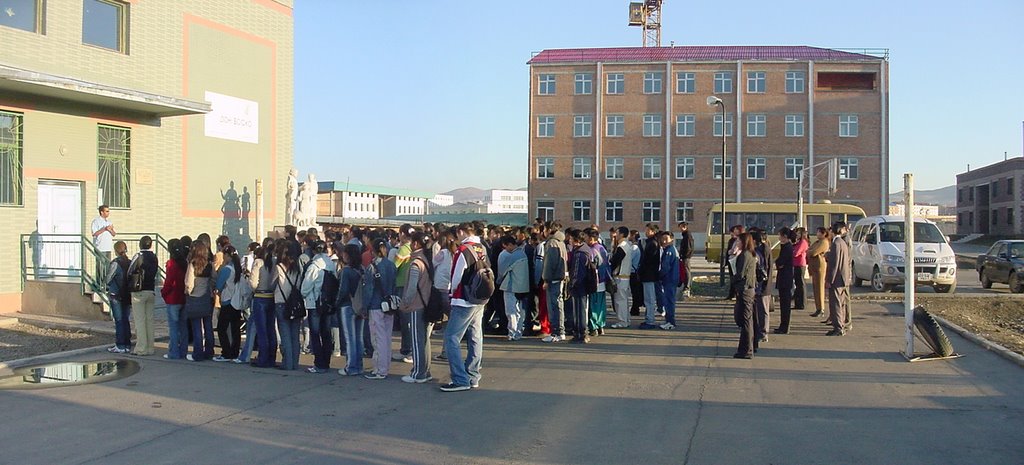
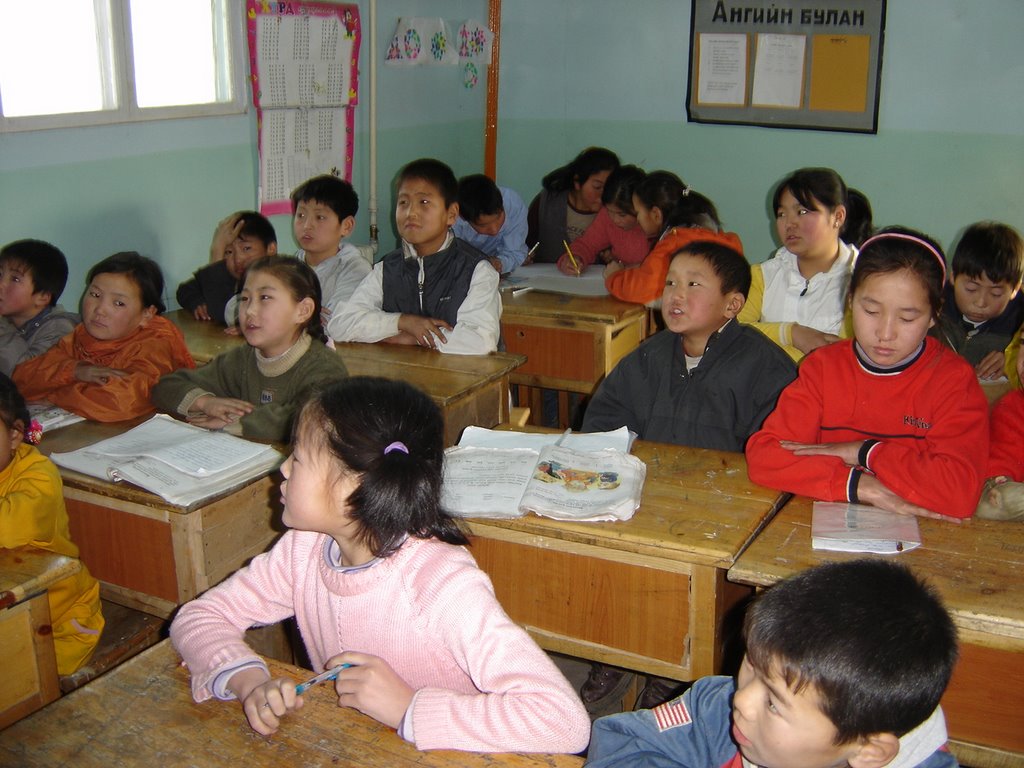
Chronologically, the first of the Salesians presence is a government
certified technical-highschool that began
with 30 students in 2001 and is now catering to almost 300 annually.
The second service is an Orphanage of 20
kids, the remains of what was before a
center for youth-at-risk, the defunct
third presence that was undersized and
merged with the Salesian community that operates the technical
highschool. To these formal education and orphanage, the Salesians
abide by Mongolian Laws that prohibit the teaching of religion. In
the north of the Capital, the Salesian presence began in 2005 as
a youth and educational
center which in turn saw the formal
establishment of the Parish of Mary our Help (2007).
An agricultural farm apostolate was also
added to the services later (2009). It is with the government
registration as a branch of the Catholic Church of Ulaanbaatar, that
Church services and catechesis are freely exercised within the walls
and premises of the Church.
- How did the salesian mission start?
- To be less formal and
juridical in reply like the above,
it would not be poetic only to say as always that the Salesian
Mission began with St. John Bosco's Madonna, our Help. Because
literally in
every respect of trying to establish a Salesian presence in
Mongolia, we made it clear that a medal of
our Lady would be tossed into the barren semi-dessert Mongolian soil
and would precede us.
And indeed we are witness to these graces. Historically
in time, we could also say that Don Bosco
already began the Salesian work in its
planning stages...
when he mentions the name Tatar
and Tataria (the
old name of Mongol tribes) in the
Biographical Memoirs of the Salesians. Moreover,
the Salesian mission in Mongolia began consequentially
also with the fruition
of the Salesian Mission in China. It is to
the Grand Mother
– Salesian Province
of China that the daughters of Salesian mission Provinces of Asia
(Philippines, Vietnam, etc.) send forth her sons to other
places as Mongolia, now
one of the grand daughters. It is no
wonder that the day before Fr. Carlo stepped into the Land of the
Steppes, he sought out an
aged and bent Fr. Mario Acquistapace, in Braga House in HongKong
(China), Fr. Carlo vividly recalls
Fr. Mario words and countenance when he
was informed: Fr. Mario, tomorrow we enter Mongolia. To this Fr.
Mario teary eyed said “This was always our dream, to enter
Mongolia someday.” And to this day, Fr. Carlo keeps a stampita
with the words Fr. Mario intentionally scribbled for him “(Mama)
Maria will bless you.” And indeed she has and will always will.
- How do you find the Mongolian youth?
- (personally speaking). Having
been in Papua New Guinea for seven (7) years and now thirteen (13)
in Mongolia, and definitely many years
before that in the Philippines, It is
clear for me that the differences
in humanity can really only be a
millimeter deep. Having said that, the youth of Mongolia like
all other youth have its potential as well as its weakness. They do
not differ I believe from any other youth of the world. They share
the same aspirations of humanity and of youthfulness. They
share the same courage and fearfulness as descendants of Chinggis
Khaan. They share the same hunger for sympathy. They share the same
receptivity to impartiality and goodness as well as sharing in the
attractiveness to rationality and truth. They share the youth's
daring to the point of even being imprudent. They need a friend who
is faithful and constant to guide them in days of fickleness. They
long for a teacher who helps them understand the
beauty of life and the reality of pain. They
seek a father and a mother who will protect them and
call them as their own. When I asked these youth of various times
and batches what are the kind of persons they like... the top three
(3) answers I hear for the past decade... the ones
who are joyful;
the ones who are
truthful and honest; the ones
who are not
drunkards, not a
thief and not the ones
who beat up others. If
my students a
decade ago were 18 years old, by now
they are reaching 30... as they were young then and now as young
adults, these values may get blurred by a society that is equally
pandered by idols of economics, but definitely they do not disappear
from their hearts. They simply lacked
constant guide posts. If
ever there is one picture to depict the resolve of the youth of
Mongolia, it would be their resilience of spirit when I see them
when it is still dark at early dawn... when its not only chilly nor
cold but in very very freezing temperatures, they walk to school day
by day when they could simply have stayed inside their warm beds.
But they still came and wanted to learn... more.
- What are the positive elements of Mongolia? (culture, people, religion, …)
- typical of the bloodline of
Chinggis Khaan, they admire loyalty. Thus this is very well seen in
their loyalty to their nuclear family and
not to their extended family because of marriage. As a natural
consequence they are loyal to their country's heritage like a true
patriot; Moreover,
this loyalty is expressed very deeply
in their respect for elders so
much so that their pronoun “Ta” (reverential 'you' for an elder)
is used with differentiated from “chi” (for an equal or younger)
for age differences. The accurate usage of these pronouns are means
to resolve or even aggravate any confrontation.
- Mongolia's constitution upholds 'freedom of Religion'. But the exercise and practice of it is limited to the citizens of the country. Which translates as foreigners (missionaries) are restricted in the practice within the confines of the Church building and its premises. Consequentially, the best 'evangelizers' in terms of mobility are Mongolians themselves since the law is favorable to them. The prophetic role of Salesian Cooperators is limitless.
- Mongolia is a country professed in Buddhism; exercising religious indifference on a daily basis for the majority, but fundamentally shaman or animist in practice during days of pain, suffering and difficulty. For the few who are familiar with Catholicism, the term Christian is attributed colloquially for Protestant denominations and Catholic is given as a distinction from Protestant sects. There is a small percentage of Muslims that are predominantly from one of the Mongol tribes called Kazakh, which name generally situates which part of the country they predominate ie. North West.
- Being of Nomadic geographically, they have a natural acceptance of new ideas and new people. The downside of which is that this ready-acceptance of ideas and people can also mean the quickness to change and that lead to lack of constancy and persistence. Like all nomadic virtues, to be welcoming is one of the outstanding traits. This welcoming attitude towards others promotes the attitudes of tolerance and of forgiveness for as long as the hurt is not that personal.
- They love their mothers... When the Salesians exercise their devotion to Mary, the Help of the faithful. The natural affinity of Mongolians to a Mother are aroused. This devotion to the Mother in heaven is a win-win formula for catechesis and devotion.
- What are the challenges?
- Without prejudice to the free
exercise of Religion within the premises of our parish church, the
preventive system in our schools and
orphanage is without religion, like
a three-legged stool lacking one leg. It does not bring depth in the
work for a 'man fully alive' (Ireneus) or 'human transformation'
this is so when the laws of the land welcome Reason and
Loving-Kindness but not freely Religion (Christian).
- Salesians must
face isolation... not loneliness. Because isolation (location in
reference to the comfort zones of one's own shoreline) does not
necessarily result in loneliness (social need). A
depth of one's Christian faith and a healthy understanding of one's
consecration results in a missionary who is 'at home' despite being
geographically and sociologically isolated.
- Rampant urbanization and high
percentage of unemployment are natural
challenges for a post-socialist economy that may have the revenue
sources but do not have the experience to apply the correct methods
for economic sustainability. Of the three million population of the
country more than a third is in the capital city of Ulaanbaatar.
- Mongolians love to read. They
have one of the highest literacy rates in the world. The
Salesians in general have failed to master the language as
to be able to write and be a fruitful force of communicating and
sharing horizons through the apostolate of publication... a tool of
Don Bosco and St. Francis de Sales that has more longevity than the
spoken word of a homily or lecture.
- I smile with frustration when
I am reminded by one of our Mongolian staff who translated the book
about Don Bosco by saying at the end... “I love Don Bosco but not
Jesus” (a bias borne of the fall out with the prosetylizing of
protestant fundamentalists that condemn everybody except
themselves). When Salesians are confused
of their consecration and identity as religious, the result is
confused messages to the people. The challenge of 'a high standard
of Christian Life' (daily prayer to Don Bosco) is very true. I have
said it many times before, it is not enough to say that we “love”
Don Bosco. Because multi-national
communities of Salesians are by-products
of different novitiates from different countries and formed by
different novice masters, the interpretation (method) of the
supposed knowledge of Don Bosco is so diverse that it breeds
disparity and not only diversity of
values. It is primarily important for the
Salesians to have the knowledge and love
of “The
Christ” of the Apostles and of Don
Bosco. And the very method of knowing and
loving Christ is fundamentally reflective on how we do Theology
today.
- It is true that the immediate indication of suitability for mission ad extra and inter-gentes is health. But freezing cold of Mongolia was not the main factor for 'return-to-sender' confreres. Neither is it the food, nor the people and the culture or language. The most common denominator for fall out is the inability live the Christian Faith in high standards ie. Naturally translates into a happy and prophetic living life as a consecrated person.
- Government laws, People
hostile to the Church and its various
presence are not only a handful but are
but natural reactions to a Christian history that began on the wrong
foot as the fundamentalist protestants may have antagonized the
indigenous Buddhist and Shamans brothers of ours. Moreover the natural flaws of
'nationalism' contributed to this animosity to anything 'foreign'.
And the Socialist's preservation of the
Buddhist status quo would be favorable to politically preserve their
control of power than to deal with by-products of a true democratic
society with the bio-diversity of beliefs. Yet the silver lining is
basically healthy “interaction.” The lack of it breeds ignorance
and with ignorance comes suspicion and animosity. But after 13 years
interacting with hundreds of parents, students and government
officials, I saw them come to the door with lots of suspicion and
when they leave (specially the alumni that leave after three years
with us) they leave not only with awe and admiration but with the
eagerness to tell their relatives and friends to send over their
sons and daughters at the soonest.
- Viva Cristo Rey!c:ako
Wednesday, February 06, 2013
TOUCHDOWN! Mongolia!2001, Feb 7. 3:45pm thirteen winters ago today.
At 3:45 pm our Mongol Airlines (MIAT) Airbus wheels "touchdown"-ed in Buyant-Ukhaa airport (Mongolian: Буянт-Ухаа нисэх онгоцны буудал) in the coldest capital city of the world, Ulaanbaatar (The Red Hero), outer Mongolia. The temperatures then were nothing compared now a days.
My beloved "chaperons" (they would leave me behind two days later) then were Fr. Odorico and Fr. Ty, my new Provincial now that this mission was entrusted to the Salesian Jurisdiction of Vietnam. And after the brief introductions to the mission by some missionaries I was left to live in the mission center for a while whilst preparing our place, our school our educative-mission work. For us Salesians, we Educate by Evangelizing and we Evangelize by Educating. This implies that with a new Evangelization requires a New Education (a topic for next)
Fr. Odorico and Fr. Ty's prayers were and are really strong it seemed. Since the last words to their parting fraternal embrace to me were "I will pray for you; learn the Mongolian Language well; prepare the coming of the rest of the team; and ...the school,...a yes the school, it must open in September" (6 months from now). To my knowledge I think with Mama Mary's help I fulfilled MOST of that with the means available with the exception of the Language studies, that was not only impossible but foolish to say the least in hindsight.
To my knowledge... I have prepared the school to the best of my God given formation and experience (with 11 year as technical student of DB-Makati, 11 years as a Salesian-Educator-Priest in the making in DB Canlubang, DB Mandaluyong, DB Paranaque; and to my first mission territory as a very young priest – ie. 7 beautiful years in Papua New Guinea)
To my knowledge... my confrères then, now and in the future will always have a place warm enough to keep the presence of St. John Bosco thawed and unfrozen if they have enough means to pay the bills.
After twelve and a half winters, nearing 500 Mongolian Youths have passed through the doors of our home, eleven graduation ceremonies, from thirty (2001) to three hundred (2012) Mongolian students per year, from seven to sixty staff, from a Russian 'cold-war' military Forgon van to a Hyundai Hybrid, from a "domboo" (colloquial for stupid) to clearly a "Дон Боско, хатуу шуударгаа гэвч маш сайн сургуул. Манай Монголд энэ шиг хэрэгтэй" (Don Bosco, very strict and honest, but is a very good school. Our Mongolia needs more of this kind). Tengerburkhan (God of the heavens and of earth) is good.
A ministry of labor official once told me to my face after pinning a medal of honor on me, that he believes we ought to be a model school for the rest. A year later he was "mysteriously" killed... and words on the street say ... because he was an honest man. A dying man usually tells the truth. God rest his good soul.
I always told the students and staff and parents, "It is useless to gain knowledge and skills without moral values. Let us produce not only students with a high school diploma. Let us produce not only students with a technical skill. Let us produce also honest, truthful, respectful, hardworking and grateful citizens of Mongolia." ...and it all begins with a good foundation of educators in good homes (parents) and good schools (educative staff).
The secret?... I come to realize that people, young as well as older ones, do not reflect much. If we all did... reflect, the possibilities for transformation are limitless. Even the first pillar of the Preventive System is Reason. Rationality in the very human conscience is open to truth, to goodness, to transformation.
From plus 40 hot temperatures in summer to minus 40 deep freeze temperatures in winter... a non issue even for people like me born in the tropics. Our subsistence in the great steppes of the central plains of Asia, should serve as a myth-buster for naysayers since freezing climates are not Waterloos for mission. You should try listening to our confrères in Siberia. Yet my baptism into subzero 45s degree Celsius was very real when I had to go by foot and public transportation to and from my 5 month stint at Mongolian language school. But the warm reception of the Mongolian youth and elders to the truth and goodness within themselves makes it worth all the while for a Salesian to prepare the seed bed for their own generations to come to embrace the fullness of Truth and Goodness in the very Person whom Khublai and Temujin aka. Chinggis Khaan called prophetically as Tenger (Burkhan).
Its humbling to be chronicled in history specially from the Rector Major... yet at great risk and responsibility when one's main task is simply to live up to what the baptist said... That He must increase, and I must decrease. I believe we ought to have more courage to implement the “correct” and “unified” charism at all cost... learning from the past twelve years, not ever again to be compromisingly soft to the clamor of a few who demanded their individualism.... and in the end, are sadly lost. May the Lord and St. John Bosco grant us mercy.
When all things failed to convince my superiors, I asked Fr. Odorico why on earth did he choose me to be the founder among founders, he said... "because you're crazy." ...nuff said. :)
--- (excerpt)----
ACTS 397: Letter of the Rector Major
Una Región misionera
La Región ha sido bendecida con la presencia de grandes misioneros, pioneros en algunos países: Mons. Luigi Versiglia (1881-1930), Mons. Ignacio Canazei (+1946), don Carlo Braga (+1972), don Mario Acquistapace (1906-2002) en China; Mons. Vincenzo Cimatti (1883-1965) en Japón; don Andrej Majcen (1905-1999) en Vietnam; don Archimede Martelli (1916-1984) en Corea del Sur: Mons. Ernesto Coppo, Señor Celestino Acerni (entrado en 1923, primer salesiano en el suelo australiano, en Kimberley) y don Joseph Ciantar (1893-1967) en Australia; y muchos otros personajes de gran relieve.
Quiero recordar también los nombres de Salesianos, pioneros en el período más reciente, 'fundadores' en los respectivos países de la Región: don José Carbonell en Indonesia; don Valeriano Barbero en Papúa Nueva Guinea; Señor José Ribeiro en Timor Este (1946); Señor Roberto Panetto y don Walter Brigolin en Camboya (Phnom Penh, 1991); don Pedro Balazar y Señor Francesco Tanaka en las Islas Salomón (Tetere, 1995); don Pietro Zago y don Hans Dopheide en Pakistán (Lahore y Quetta, 1998); don Julian Fox en Fiji (1999); don Carlo Villegas en Mongolia (Ulaanbataar, 2001).
Wednesday, July 13, 2011
a pasahero's two sentimos pasaje
We are merely stewards of every God given good thing seen and unseen... and are accountable to both God and to our neighbor. its so trite (lame) to say 'lapse of judgment' now a days... better to simply call a spade a spade... a 'stupid call' then? not even close (stupid is too mild)... SPECIALLY when and if one asked for a birthday gift in writing from a public official with public funds... the nerve even to ask as a joke as pinoys do.
ask for nothing, refuse nothing... would even be dangerous nowadays. nothing is given free.... always with payback-time in mind? i still believe in the free-neess of generosity... without anything in return. yep its rare but not extinct. i still can believe because i still am standing... sometimes alone, but not everytime... its possible to increase free-ness of giving... it simply needs practice. c:
The carpenter's son from galilee would be best heeded in these days were devilish and angelic ways are not as distinct to the untrained eye... its not enough to be 'gentle as doves, but ALSO be cunning as snakes.' i hope being born in the year of the snake does not only bring me good luck but also its senisitivity to the signs of these times (and places)
'test everything and keep what is good... what is holy' is what we heard from the PASTORAL epistles.
Despite the 'return' of the vehicles and the 'won't take it back' melodramatic stance of some (i would have done the same, but with receipts of no-return-no-exchange... if only to find a 'sense and humor' in all these mess); the fact remains that inspite of sincerely providing these 'seen goods' of the earth for the good of the people in need... there will always be a way to discredit the good that was done. Let the poor speak for themselves, some say. But even if the poor were to so speak in the defense of the few 'branded' damasos, who would you think would listen... listen to the poor?... listen to the 'branded' damasos? it is not easy to do good today... it is not easy to be holy today... when what is holy, what is good news... is 'edited' as not good or relegated to the pile of "not worthy of news"... sittinhg on the bodega shelf that reads... probably 'next time' nalang.
very few puiblications publish good things... why? 'no one buys them' monetarily and reputably. inadvertenly then... very few want to do good things... why? ...again 'no one buys them (same rationale).
its already an insult (racist, profiling to put it bluntly) to be branded a DAMASO just by looking at you... when one has striven never to be one.
Yet what is more frustrating is when we 'supposed' damasos give them reason to say so and reason to trumpet it.
these two sentimos pasaje... is from a beleagured damasito who still believes in the goodness and goodwill in a heart created in the image and likes of God.
its easy to do good... its not hard even if others make it discouragingly difficult.... learning always from the old wisdom of the ages and holy book... servus inutile summus. its easier to smile becasue we are merely another "pasajero" in God's calesa... let him lead the way not us.
c:ako
(from a pasahero of one good calesa driver, God.)
Wednesday, January 19, 2011
Monday, February 02, 2009
Medal of Honor from the Mongolian Government
On the 2nd of February, I was asked to go to the Government house for a supposed
Saturday, September 30, 2006
Mongolia - Savio Children`s Home promoted as model institution
(ANS - Ulaan Bataar: 29 September 2006) - Mongolia's Weekly, the Millennium Messenger, has promoted Savio Children's Home, run by the Salesian community at Amgalang, near Ulaan Baatar, as a model for all such institutions in Mongolia. The newspaper article included interviews with some of the 45 children housed there, and focused both on the background of the children and the quality and effectiveness of the service offered by the Salesians and their many helpers. There are three full-time Salesians involved in the work, and many volunteers who help either full or part-time including at least 100 foreign volunteers (mainly from Korea) who have passed through the institution offering a helping hand this year. Now that the Amgalang Centre has come up to full strength in terms of Salesian personnel, the desire is to complete the building and to establish stronger links with the Don Bosco technical and skills centre in Ulaan baatar itself. Already some 23 students are commuting daily to UB from Amgalang by truck to continue their studies. They join 230 students who attend the city technical centre. Savio Home is not the only such institution run by the Salesians. A similar institution exists now in Darkhan further to the north of the country. The Darkhan educational centre has 87 students who daily attend class for English and computer classes. other students come to enjoy the oratory experience. The Salesians have established a name for themselves in both formal and informal education. Mongolia has its universities but very few institutions which respond to the needs of skilled training, and the building industry is booming now in the urban centres in Mongolia, requiring skilled workers. Salesian presence in Mongolia, only 3 in number in 2001, will jump to 10 with the arrival of Fr Paul Leung from China province. The Salesians are now the largest male Congregation amongst the Catholic communities in the country. Hopes for 2007 include, besides the completion of the Savio Children's Centre, the building of a gymnasium at the Ulaan Bataar Don Bosco Techncial Centre and buying and/or building a proper Church in Darkhan.
Sunday, July 30, 2006
There is a time to work an a time to pray
from "austraLasia 1618"
Mongolia's Darkhan now has an official Catholic Church - Don Bosco Darkhan
ULAAN BAATAR: 28th July 2006 -- The recent Nadaam festivities, briefly reported in an earlier austraLasia, had their benefits for the new Salesian presence in Darkhan in Mongolia's northern region, though it would be truer to say that the Salesian witness both in Ulaan Baatar and Darkhan is what has convinced the authorities.
Darkhan city authorities had already made a decision not to accept new churches in the city - they believed they had too many. Several Christian groups have thus been turned down. The Salesians were there, though not officially as Church in Government terms, but the authorities have closely and with appreciation, followed what they describe as the 'humanitarian work especially in education' of the Salesians. The Salesian Superior in Mongolia, Fr Carlo Villegas, speaking with Darkhan city authorities, pointed out that Salesians work 'in the world' even before they seek official presence as Church, and that they as Catholic Church work for the total development of the person anywhere in the world. The authorities were impressed, as were their immediate predecessors, with the educational and holistic development of youngsters resulting from Salesian presence.
Fr Carlo and the Darkhan authorities' discussion was somewhat reminiscent of the Don Bosco-Ratazzi discussion well documented by Don Bosco himself. Fr Carlo pointed out that he was not seeking permission for Church identity and within that to run educational services, as that would in fact run contrary to the Mongolian Government's education department policy, which expressly forbids religious activities as part of education. The authorities also found that impressive! They asked in the bygoing if Fr Carlo and the Salesians could help out, perhaps, with the Nadaam festivities in the%
Sunday, March 26, 2006
Ugluuni mend!
The Short Talk each day in all Don Bosco Schools and Centers... is a Legacy of Love and Concern, a wise Mother, Mama Margaret Bosco has left behind to her children.Daily Good Morning Talk is also relived in Mongolia's DBITSC Students and Staff.
The pedagogy of Mama Margaret's "Buona Notte" (Good Night, in Italian) is a pedagogical wisdom and educational legacy, a simple Mother left behind - to find time each day for a 'parent' to speak from the heart to her sons and daughers.
Margaret Bosco not only loved her children but understood how to love them. She taught it to her sons. Don Bosco later continued this filial tradition which later became a characteristic methodology of Forming the Young to be "God fearing Believers and Honest Citizens of their Nation." This now famous "Salesian" tradition was passed on to all Salesians, Students and Collaborators who walk the paths inside the schools and centers inspired by the Educational Methodology of St. John Bosco.
This Salesian Educational Tradition is so simple yet with its constancy, it enables that needed constant 'reflection' to the youth and to everyone who may take things for granted without distinguishing essentials from non-essentials in life. Mama Margaret wisely taught it to Don Bosco then and she still does teach it to her sons and daughters 150 years later after her death (1856-2006). What is even more amazing is that as years and boundaries go by, The Love and Art of Educating the Heart of the Young with this Methodology is effective where ever the Salesian Spirit is grown in the world... even to Mongolian Youth.
Thursday, March 23, 2006
Fatherhood. Being all things to all men
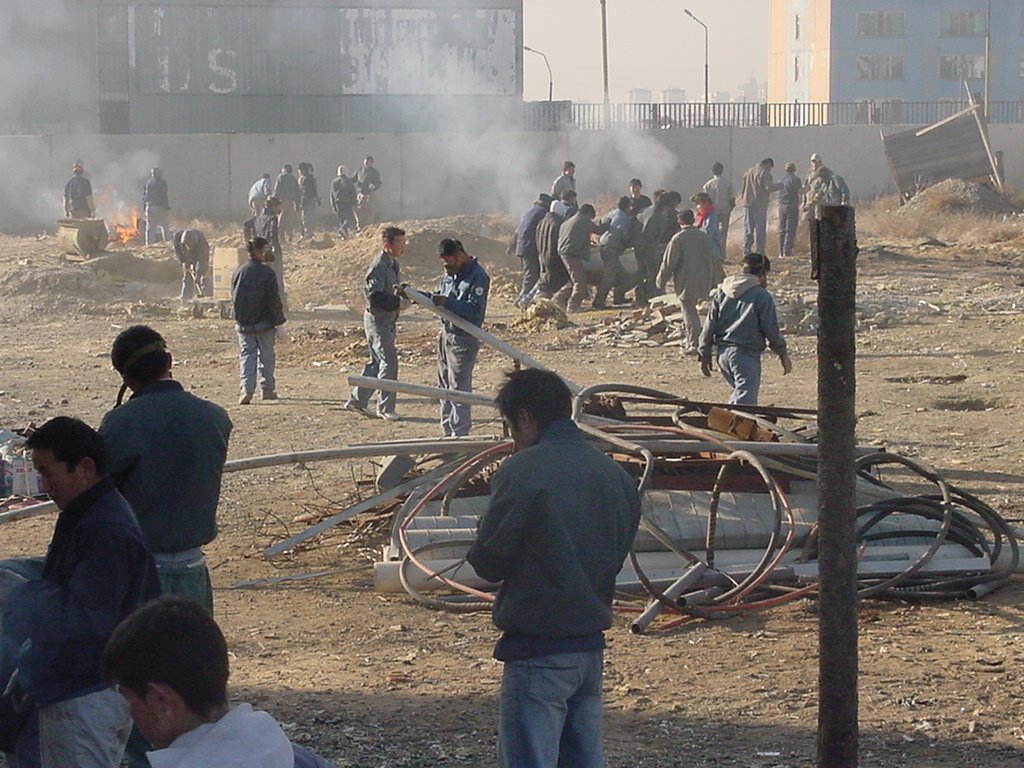
(Left) DBITSC Technical Students doing community service clean-up of the mess left over by the construction company. (Right) DBYC Kids from the streets and neighboring village undergoing literacy classess and elementary studies

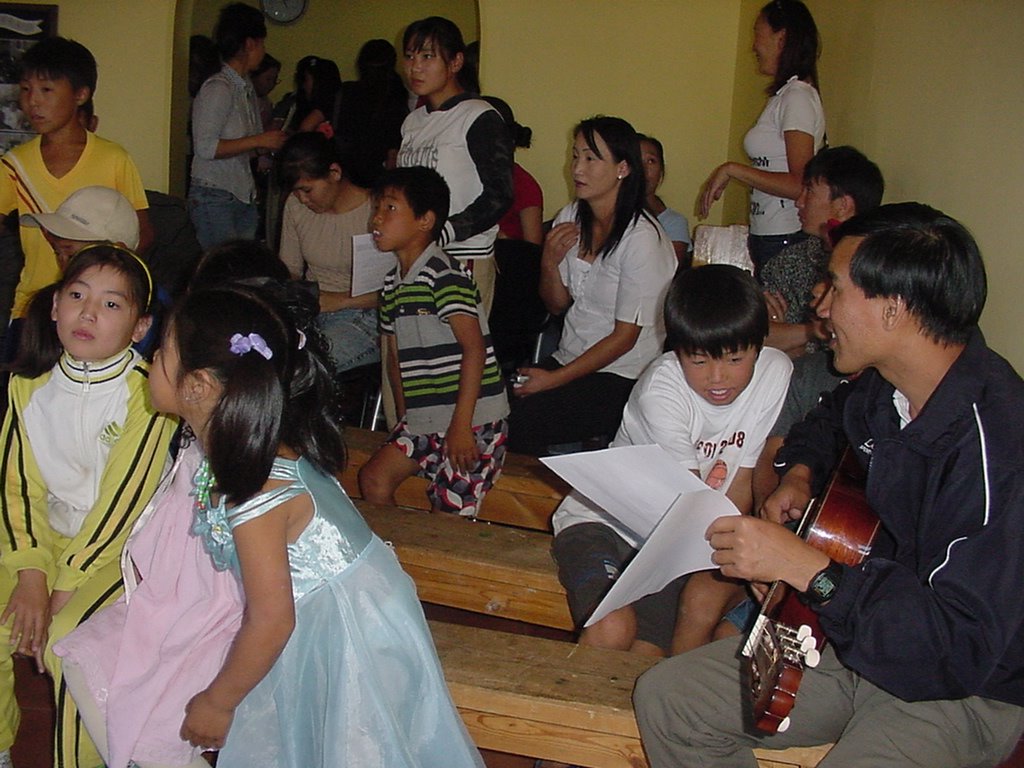
(Left) DBEC-Darkhan Fr. Lawrence staying with the people and kids after a regular sunday quasi-parish celebration; (Right) DBEC-Darkhan Fr. James making sure that the smaller kids would also have time to play after the bigger 'bullys' have had their fill of play.
Wednesday, March 22, 2006
Peace is a human need. Unity is human responsibility.
In Unity, Peace!
Mother Alan Qo’a had two sons by Dobun-mergen, namely Belguenuetei and Bueguenuetei. After her husband died, Alan Qo’a bore three more sons Buqu-qadagi, Bugatu-salji, Bodonchar-munchqaq. The first two, Belguenuetei and Bueguentei were secretly red with jealous anger of the other three. As a mother, Alan Qo’a knew their thoughts and one day called all 5 sons to her presence. To each she gave a shaft of an arrow. And to each she asked this to be broken into half. The 5 sons readily broke the shaft still wondering what their Mother was up to. Then Mother Alan Qo’a took from a quiver a bundle of 5 arrows which she bundled together and gave to them to break. None of 5 was able to break the bundle of arrows into half. Then Mother Alan Qo’a said, alone you can easily be broken by anyone. Together and of one mind, like a bound arrow-shafts none can easily vanquish you. (19-22. “The Secret History of the Mongols”, Prof. Urgunge Transl.)
The Excerpt above was taken from the famous “The Secret History of the Mongols”. It is of tradition that the lineage and heritage of the great Mongols come from this great Mother. For the historian of Mongols the arrow is not only a deadly projectile for hunting and for war. It was also called with a “term that meant ‘straightness of mind’ – in itself implying overtones of moral integrity” (Urgunge, a translator of this edition of the Secret History…)
The title of this article may initially be seen as far fetched with the person of Chinggis Khaan (Genghis Khan, Anglicized version) characterized by some historians as one who mercilessly took many lives and literally cut them short. But after a few 12 years of missionary life (7 in Papua New Guinea and 5 in Mongolia), I have been taught by my mistakes to listen and be left in Wonder. More than war, a man loves peace. And Peace is a fruit of communion.
After five years or shall I say in more poetic words as the Chinggis would have had it said, after five winters with the people of the felt-walled tents, Life has been WONDER-full.
A Life of wonder is something one cannot exchange for all the price tags a sight-seeing tourist-package can offer. Lest the readers be misled, Wonder should not be equated with only the scent and the velvety touch of roses or be equated with only the thorns. Wonder comes with the fact that the roses come ‘packaged’ with the thorns. Just as snow is not only a matter of immaculate whites and fluffy flakes but also bringing freezing chills and bone racking.
With more than 300 Mongolians registered (not counting the ex-patriates who are in country for reason of business or diplomatic services) in the Liber Baptismorum, the Sunday Eucharist of the Lord is celebrated in three parishes churches and three chapels (soon to be quasi-parishes) simultaneously each Sunday morning. And the wonderful part is that, the larger portion of those who attend the Eucharist are Mongolians not yet baptized – and still faithfully come. The reason being, they too would like to gather and to pray. (all liturgies are in the vernacular; missionaries are obliged to make the 2 year Mongolian Language Course first before diving into the fray of the vineyard of the Lord).
Our
Under communistic laws and atheistic ideologies, no religious instruction is allowed in an establishment other than a duly state recognized Church building. In the early years after 1992, when the
The mentioning of the Salesian works (should) come only within the context of the situation and life of the people and of the
Thus, we Salesians cater to the poorer youth from those on the streets to the underprivileged youth without a job because they were not given a chance to study well and finish a high-school and college education. From the very beginning a school was asked of the Salesians by the Apostolic Nuncio (to
After the establishment of the
The
The second Oratory is a budding
It has 40 co-ed students that avail of the In-Formal Computer and English Language Lessons offered. And as the late afternoon comes, more than 100 youth and kids avail of the recreational services offered. On Sundays, a quasi parish community is being developed. Currently 15 adults have freely and willingly enrolled for catechesis. Unless the Catholic faith and gospel values are not from within the Mongolian people, the Beautiful work and dedication for the poorer youth will not be as effective and faithful. The work in the north, the second biggest concentration of Catholic presence outside of the Capital is well on its way.
80% (a very generous estimate) of youth and kids in our centers (the school and the oratory) located in the capital are from single parents. Most of the cases are due to divorce. Poverty is something they were unfortunately born into. The easiest to see is the poverty of economics… not enough tuition (many can pay only 20$; hardly 15% pay the yearly tuition of 200$ we ask in public; No one can pay the 400$ needed per student if the school should run on its own to pay at least its salaries to local teachers and for electricity and heating in a sub-zero climate half of the year). Yet the more bitter and stark poverty is when you still WONDER why out-of-school youth STILL drop off from our school with the excuse of bad-influence of the pull of companions they had from the streets, then Ill-Health and worse, unsupportive if not non-existent parents.
800 years ago the great divided tribes of the steppes were united into the first Mongol state. This year, 2006 the people and government of
With God’s grace and the intercession of the Mama Mary, Help of those who Believe, who has gathered her poor and young children to be sheltered under the homes of Don Bosco would make the Salesians worthy enough to be men steeped in prayer as and stooped with undying work for building unity in a person and thus contribute to making the great Mother and Mongolian youth of 1206 and 2006 fulfill their dreams - to be gathered strong and whole as family in communion.
“In the year of the Tiger, the people of the felt-walled tents gathered around the river Onon, the Tatars, the Onggirats, the Tayichi’ut, the Kereyit, Naiman, Merkit and Jadaran tribes and various smaller tribes” (202.The Secret History of the Mongols) to form what the world now forever remembers as the Mongol people. In the same gathering of all these chiefs of the tribes, they chose a man, the one who had in fact fought to the point of death, to gather them as one. That day, 1206 the great tribes of the steppes chose Chinggis to be their Khaan, their King.”
Perennial Mission Challenge... Is between the eyes.
Wednesday, November 02, 2005
Legit Moms and Dads
I know for one, that the nuns would have at least some reason why they would blow their top and put a lid on things in their house. The nuns had reasons... vaguely known?... or not understood enough, ...probably. A large critic of the nuns as I am, deep down I believed these nuns had their greater reasons for the good of these kids in the long run. And this ought to be respected.
The Teacher's eyebrows were twitching by this time. I guessed she really was having a hell of a time figuring out how to reconcile her previous notion of nuns as charitable 'creatures' with her current perception of a stern mother hen who was shooing off the chicks back to their 'places of origin' (in her mind) - their homes.
Thinking out loud to her I said, I would have done the same had I known that these kids have their own parents, single, divorced or in whatever lot they came. The first responsibility to take care of these kids are theirs not ours as 'social-workers'. As many of the cases of these kids have shown, they have a mom or have parents that literally are glad to send their kids to stay and live with the nuns. A free bed space, food and bus-fares are an attractive come-on. And surely enough, an irresistible opportunity not to pass by to lighten the burdens of a crowded home.
Staying with the nuns, for some, it truly helps alleviate the burdens of their home. But on an equal plane the numbers are high of moms or parents who literally take advantage of the kindness of some naive yet well intentioned NGO (religious or not).
The bottom line is, no one replaces a mom or a dad whether she or he be poor or richly endowed. They retain their right as well as the responsibility to be their children's Legitimate Moms and Dads.
The job of NGO's is not to replace families nor replace the role of parents in families. The jobs of NGO's or even of nuns is to build families not separate them. Parents, no matter how shrewed or "opportunistically" talented they may be, they retain their right as well as the responsibility to be their children's Legitimate Moms and Dads. - not the nuns (nor us).
This 'commotion' will give parents a chance to be legit moms & dads again. This commotion will give the kids a real chance to grow into legit moms & dads themselves someday. With this 'commotion' I'm glad that the kids will have an opportunity now to go HOME.